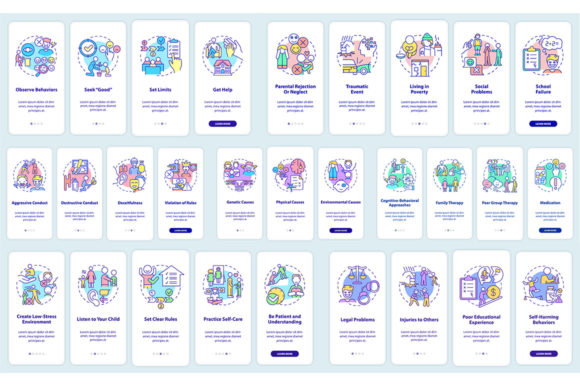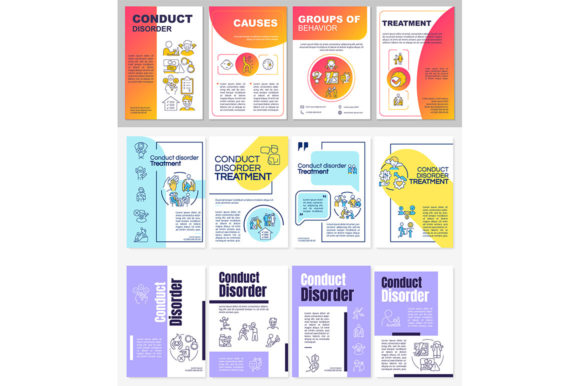
Conduct Disorder Risk Factors Templates
As an embroidery designer with years of experience, I always start by evaluating a design’s potential before committing it to a project. Conduct Disorder Risk Factors Templates caught my attention as a graphic template set meant for onboarding and web use. But the real question is: how does it translate to actual embroidery work? Let’s break it down.
First Impressions: A Clean, Professional Look
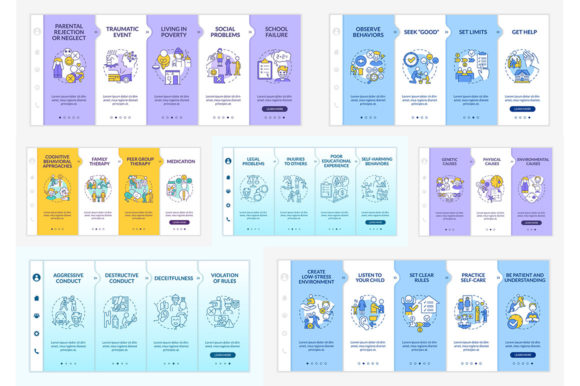
The Conduct Disorder Risk Factors Templates have a modern, structured feel. The linear concept icons and use of Lato-Bold and Regular fonts give it a professional, easy-to-read vibe. It’s not flashy, but that’s part of its appeal. This design would fit well in a digital product or printable mockup, especially for educational or informational purposes. However, when thinking about embroidery, the visual personality needs to translate into stitch patterns that are both clear and visually appealing.
The layout is clean, with a focus on simplicity. That’s great for a website or app interface, but when converted to an embroidery file, the lack of intricate details might make it less versatile for more complex projects. Still, for something like a tote bag design or a sweatshirt embroidery, it could work—provided the stitching is done correctly.
Real-World Embroidery Use Cases
Imagine you’re creating a custom embroidered tote bag for a client who wants to promote mental health awareness. The Conduct Disorder Risk Factors Templates could be a starting point. But before jumping into stitching, consider how the design will look on fabric. The bold text and simple icons may not translate well to smaller hoop sizes or delicate fabrics.
This design works best on larger, flat surfaces like t-shirts, sweatshirts, or aprons. It could also be used for baby items, such as onesies or blankets, where clarity and readability are key. However, if you're planning to use it on a cap or a patch, the linear style might appear too minimal, especially if the design has to wrap around a curved surface.
For commercial embroidery projects, the Conduct Disorder Risk Factors Templates could serve as a base for branded merchandise. But again, the simplicity of the design means it might not stand out as much as something more detailed. If you're selling this as a digital embroidery file, you’ll need to ensure it’s adaptable enough for different uses and fabric types.
Where to Be Cautious
There are several areas where the Conduct Disorder Risk Factors Templates might not perform as well. For example, on small hoop sizes, the design could become too cramped, making it hard to stitch accurately. Thin or stretchy fabrics may cause the stitches to pucker or distort, especially if the design has dense fill areas.
Dark fabrics can also be a challenge. The contrast between the thread color and the background needs to be strong enough to make the design visible. If the design is too light, it might not show up well on black or navy backgrounds. Similarly, textured fabrics could make the stitching look uneven, especially if the design includes satin stitch or fill stitch elements.
If you're planning to use this design for a personalized gift or a handmade product, you’ll want to test it on scrap fabric first. Check the stitch density and ensure the stabilizer is appropriate for the fabric type. For baby items, extra care is needed to avoid any rough edges or excessive stitching that could irritate sensitive skin.
Visual Appeal and Customer Perception
When it comes to visual appeal, the Conduct Disorder Risk Factors Templates are functional but not eye-catching. This could be a good thing if you’re aiming for a minimalist aesthetic, but it might not impress customers looking for something more unique. In a competitive market like Etsy or craft fairs, standing out is crucial.
Stitching clarity is another factor. The design’s simplicity helps with clarity, but if the text is too small or the lines are too thin, it might not hold up under close inspection. For a finished product, especially one intended for resale, every detail matters. Customers expect quality, and a poorly executed embroidery design can damage your reputation.
From a brand consistency perspective, the Conduct Disorder Risk Factors Templates could work if your brand aligns with a clean, professional look. But if you’re targeting a more creative or artistic audience, this design might not fit the bill. It’s important to match the design’s tone with your overall brand identity.
Practical Designer Notes
Before using the Conduct Disorder Risk Factors Templates in your next embroidery project, here are some key steps to take:
- Test the design on scrap fabric to see how it looks and feels.
- Check thread color contrast against different fabric backgrounds.
- Review the stitch density to ensure it’s suitable for your project.
- Confirm the hoop size required for the design and whether it fits your machine.
- Inspect small details like lettering and corners for accuracy.
- Try the design in black and white mockups to see how it appears without color.
- Compare the design on light and dark fabric to ensure visibility.
- Use the proper stabilizer for the fabric type to prevent puckering.
- Verify that the design works for both personal and commercial use.
- Check the licensing terms before selling finished items or digital products.
By taking these steps, you can ensure that the Conduct Disorder Risk Factors Templates meet your standards and deliver a high-quality result.
Final Thoughts: A Useful Tool with Limitations
The Conduct Disorder Risk Factors Templates are a solid choice for those looking for a clean, structured design that can be adapted for various embroidery projects. They work well for custom apparel, baby items, and commercial merchandise, but they require careful consideration when it comes to fabric type, hoop size, and stitch density.
If you're an embroidery designer, small business owner, or Etsy seller, this template set could be a valuable addition to your design assets. Just remember to test it thoroughly and tailor it to your specific needs. With the right approach, it can help you create professional, polished, and visually appealing embroidered products.