Lifelong Learning Infographic Templates: A Designer’s Practical Take
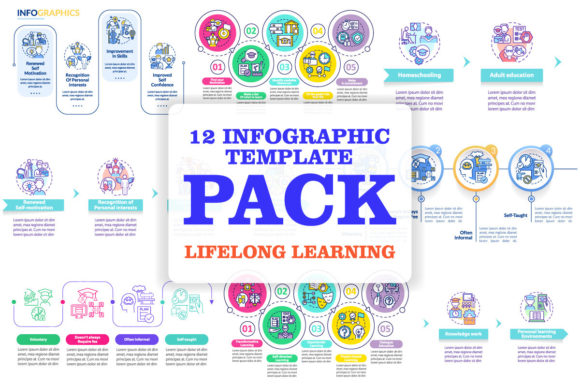
As a designer who regularly works with branding, marketing visuals, and packaging for small businesses and creative marketplaces, I’m always on the lookout for design assets that can elevate a project without overwhelming it. Recently, I had the chance to review Lifelong Learning Infographic Templates, a set of graphics aimed at helping users visualize processes, timelines, and educational workflows. Here's how they stack up in real-world applications.
First Impressions and Visual Mood
The first thing that caught my eye was the clean, modern aesthetic of the templates. These are clearly crafted for clarity—something essential when dealing with infographics. The use of Lato-Bold and Regular fonts gives them a professional yet approachable tone, which is great for both educational content and lifestyle-oriented brands. The line icons add movement and structure without being too busy, making these graphics ideal for explaining step-by-step concepts or visualizing personal growth journeys.
I could immediately see how these would work well in projects for handmade businesses, small business branding, and even print-on-demand sellers looking to create educational-style products like wall art, planners, or social media posts about learning and development.
Real-World Design Applications
Lifelong Learning Infographic Templates aren’t just static illustrations—they’re functional elements that support storytelling. In one recent client project for an online course platform, I needed to show the journey from beginner to expert in a visually engaging way. These templates offered a natural fit for creating a process timeline info chart, allowing me to present the learning path in a structured, easy-to-follow format.
Here’s how they performed across different mediums:
- Product Mockups: When placed on mockups for notebooks, calendars, and posters, the infographic added depth and purpose to otherwise flat designs.
- Brand Identity Work: For a client focused on education and self-improvement, the templates helped reinforce the brand’s mission through consistent visual language.
- Social Media Graphics: The workflow layout was perfect for Instagram posts and Pinterest pins where visual hierarchy is key to capturing attention quickly.
- Cricut Projects: As part of a Cricut project for custom stickers and labels, the line icon style ensured scalability and legibility at smaller sizes.
- Printable Designs: Whether used in blog headers or downloadable PDFs, the transparency and file quality were impressive, especially when printed as wall art or merchandise.
Where They Shine
These templates perform best in large layout areas such as hero banners, editorial spreads, or product mockups where the process-based visuals can breathe. Their structured flow makes them excellent for commercial design assets that need to convey information efficiently, like infographics for websites or brand identity materials.
They also lend themselves well to themed collections, particularly those around personal development, education, or career progression. For digital sellers, the templates can be integrated into Canva templates or used as supporting elements in digital ads or blog visuals. The workflow layout is especially useful for marketing visuals that guide users through steps or highlight milestones.
Use With Caution
While versatile, there are some scenarios where these templates might not be the best choice. For example, if you're working on a minimalist branding project or designing for a corporate audience that prefers very clean, sans-heavy layouts, the line icon style may feel a bit too illustrative or youthful. That said, with thoughtful editing, they can still be adapted to suit more professional needs.
Also, since they include multiple layers and components, using them in crowded layouts or on complex backgrounds could lead to a loss of readability. I recommend previewing them in various contexts before finalizing their placement.
Design Performance and Readability
One of the strengths of this template bundle is its clear visual hierarchy. Each section is logically separated, with bold text and line icons guiding the viewer through the content. This helps maintain readability, even when the infographic includes several steps or data points.
However, when testing the templates in black and white, I noticed that some of the subtle color contrasts weren’t as effective. Designers should consider adjusting colors or adding texture overlays to preserve visual interest in grayscale versions. Similarly, placing them on light or dark backgrounds revealed that certain elements required tweaking to ensure proper contrast.
Commercial Use and Licensing
Before using any design asset commercially, it’s crucial to verify the licensing terms. In this case, the Lifelong Learning Infographic Templates come with a commercial license, which is a big plus for designers working on paid projects. This means they can be confidently used in Etsy products, SVG designs, PNG graphics, and other print-on-demand items.
I also tested the print quality by printing a sample poster and was pleased with the sharpness of the line work and font clarity. If you plan to use them in physical formats like t-shirt design or mug prints, make sure to test at actual size to confirm legibility and detail retention.
Comparisons and Flexibility
I compared these templates with other font styles—serif, script, handwritten, and display—to see how they’d adapt. While the Lato fonts provide a solid foundation, pairing them with a serif typeface for titles added a nice balance between professionalism and warmth. This flexibility is important for maintaining brand consistency while allowing for customization based on the project’s tone.
For clients who want something more decorative, these templates can be enhanced with additional clipart or illustrations, but care must be taken not to overcomplicate the message. Their strength lies in simplicity and clarity, so it’s best to keep supporting elements minimal.
Emotional Appeal and Audience Engagement
What sets Lifelong Learning Infographic Templates apart is their ability to evoke a sense of progress and empowerment. The stylized line icons and structured workflow layout suggest a journey, which is emotionally resonant for audiences interested in growth, whether in education, fitness, or career development.
This emotional appeal translates well into editorial design and campaign visuals, where the goal is to engage readers and encourage action. The templates don’t shout; instead, they invite the viewer to follow along, which is invaluable for content creators and marketers aiming to build trust and recognition through visual storytelling.
Professionalism and Overall Impression
Though they have a friendly, almost motivational tone, these templates don’t sacrifice professionalism. They’re well-suited for creative design projects that aim to educate or inspire without appearing overly casual. This makes them a strong fit for boutique product lines, local events, or seasonal campaigns that benefit from a polished yet accessible look.
In one project, I layered the infographic behind a logo to create a cohesive brand identity system. It worked surprisingly well—the data visualization with steps complemented the logo’s message of continuous improvement. The result felt intentional and trustworthy, two qualities every graphic design asset should bring to the table.
Designer Notes Before Using Commercially
- Test in Black and White: Confirm that the visual hierarchy holds without color.
- Check Contrast: Ensure legibility on both light and dark backgrounds.
- Preview Sizes: Test at both large and small scales to avoid distortion or loss of detail.
- Place on Real Mockups: See how they interact with actual product surfaces or web page elements.
- Test Print Quality: Especially if planning for physical goods like stickers or merchandise.
- Review File Formats: Make sure you receive high-quality SVG and PNG files suitable for scaling and layering.
- Inspect Transparency: If using for overlays or transparent substrates, confirm PNG transparency is intact.
- Confirm Commercial License: Always double-check permissions before using in client work or marketplace listings.
Final Thoughts for Designers
In conclusion, Lifelong Learning Infographic Templates offer a refreshing take on process-driven design. They’re not just another graphic design asset; they’re a tool that supports meaningful communication. Whether you’re working on a product label, web design, or social media campaign, these templates can help your message resonate more deeply with your audience.
If you're a designer, marketer, or content creator looking to add a touch of clarity and motivation to your next project, consider integrating these templates into your workflow. Just remember to tailor them to your specific needs and always validate their performance across all intended uses.